Sunday, July 17, 2011

July 17, 2011 Chapter 2 (Still Unedited Continued From Yesterday)


In my spare time, of which I have very little, I write.  There are days when I don't feel like writing and other days when the words flow into my mind with ease.  I am preparing this book about my adventures in Honduras where my grandchildren and great-grandchildren will know what I experienced as a missionary.  What you are reading is an unedited version.  I am sure it will change some as I think of other things which must be included.


Wall at the farm

Chapter Two

Daniel Palma Cerrato has been a nightmare of a neighbor, nefarious.  He is the kind of person everyone hopes they never meet, much less have to live with as a neighbor.  I have had the police arrest him and throw in jail two times, as of this date, once for stealing my ducks and the second time for continually turning off my water.   I am sure there will be more days in jail to come, because Daniel is unrepentant and hell bent on doing wrong. There is a higher power, in control,  that has more authority than Daniel Palma. [2] 

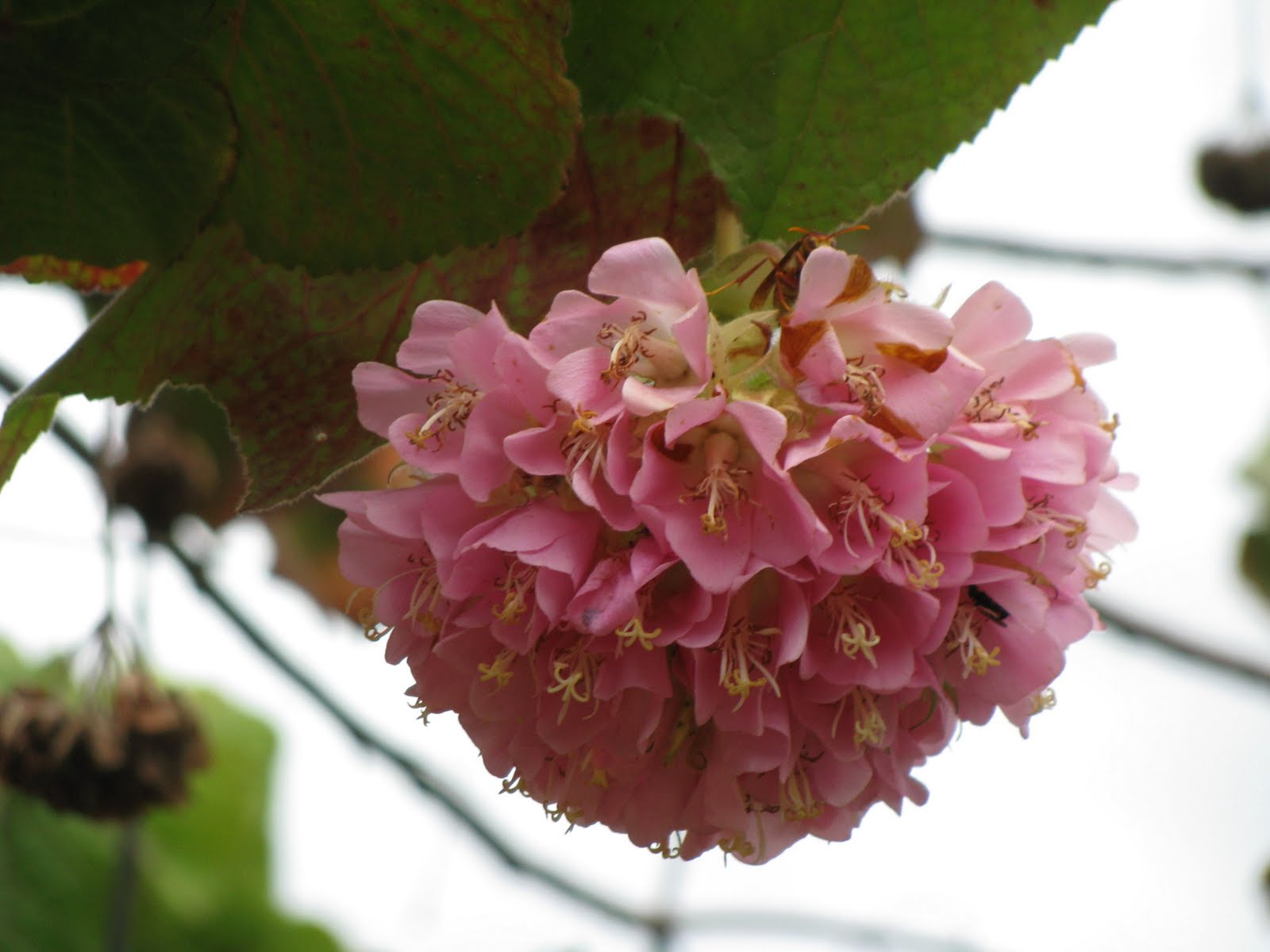
More orchids...
Does anyone know their name?

Currently, Daniel is so afraid of losing a day’s “mono de obra” [3], he no longer messes with me.  Each time he is placed in custody for twenty-four hours, he loses wages.  Through my insistence that what is mine, is mine, and not to be touched by him or stolen from me by his family, I have taught him a lesson that he cannot bully everyone.  I have managed to make it seem easier for him to be a gentleman to me, than to aggravate me and pilfer from me.  Daniel and his children continually terrorize all of my neighbors causing a carfuffle as they help themselves to what ever suits their fancy. 

Early on, Daniel and his children were stealing [5] my ducks, de-feathering them, stuffing them in a pot, cooking them and eating them without my permission.  It wasn’t long before some of the neighbors were reporting the thieves to Moncho and Luz.  Eventually I was to get a restraining order to preclude Daniel and his children from entering my farm.


Dona Vidalia and her calf

 A few months ago I saw Daniel’s curly headed teenage son and two friends robbing Doña [6] Rosa’s pulperia [7].   I went to the police, made a report and as a result the teens were put in jail for twenty four hours.  Some of the money stolen was recovered, but once again I was nose to nose with Daniel Palma in the police station.  I told the police in Daniel’s presence that he, Daniel was to blame for teaching the children their depravity.  Daniel responded by saying that I needed to return to the United States and that I had no rights in Honduras.  I laughed as I informed him that the Honduran laws clearly stated that I do have rights, very similar to his native born rights, the major difference being that I can not vote.  I suggested to him that he might want to read Honduran laws before he showed his ignorance by saying things that were not true.  I continued on in front of the police with a small sermon regarding Biblical values and they made sure that he was attentive and not speaking while I was speaking.  Little did I know that my sermonette was an answer to prayer.


Orchids at the farm
Does anyone know their name?

Daniel is uneducated he can neither read nor write.  Honduras has a literacy rate of 76% but Daniel was as rebellious as a small child as he is now and did not want to attend school.  Literacy alone is not a problem, I know many people that are unable to read or write, but have strong moral character.  Papi, Monco’s father, is a prime example.  Daniel, however is a man who exudes debauchery in everything he does.   He lies, he cheats, he steals but worse than this, he intimidates people.  Good people, honest people acquiesce to his ideas, in order not to be presumed to be his enemy.  Daniel’s presence terrifies people; he uses fear, bullying and verbal abuse to maintain a position of supremacy.  The good people in the aldea [9] below my farm have “voted” him in as an axuilar [10] for El Socoro.  When I asked some of the residents of El Socoro why Daniel had been voted to be the axuilar, the people responded that they are fearful to take a stand against this evil man.  They are afraid with good reason.  He is mean.


Outside my house at the farm

When I first met Daniel I was stunned, no not stunned, but utterly shocked at his voice.  He has absolutely, the lowest bass voice I have ever heard in my entire life!  I have never heard him sing, but his talking voice is so low, it is astonishing.  He walked into my life one day in 1994 or 1995 as I was having a free medical clinic at my farm for the poor people.  He arrived with his horde of children, AK-47 assault weapon in hand, his taciturn wife dutifully trailing fifteen feet behind, and he fully expected to cut in front of the line of people who had been patiently waiting their turn for hours to see the gringo, “Doctor Ed Jelonek” who had come to help them.  


Geese and Chickens

At this first time meeting with Daniel, my initial nose to nose confrontation with him, I had no way of envisioning the trouble that he would cause me, the patience that I would glean from my encounters with him, the fear that people had for him, or the way that God would use my willingness to forgive him as a real testimony to the people that lived around my farm.  I had no clue that this man and his deliberate attempts to steal and run me off my land and out of Honduras were just a small taste of what was to happen in the future.  How could I possibly know that yet another man under satanic afflatus would soon begin stalking me in an attempt to kidnap me for ransom? 

How could I possibly know that Daniel Palma and several others with similar modus operandi were part of a far larger picture?  These people, Daniel Palma, attorney Jose Roberto E. A., police officer S. A. R. F., the gang from Los Povos, F. I. M. C., J. I. C. S., police officer J. S. J. O. and many others too numerous to name and some with unknown names, were all in the right place at the right time, each with a devilish mission.  Each mission was carefully designed to give me a hard time and to cause me to flee Honduras, flee my calling and my mission in life, tail tucked between my legs, like a beat up old dog.  The goal of each was to steal something from me, get me out of Honduras and to keep me from completing what I was born to do.  


The fountain behind my house decorated for a wedding

The way that I confronted each situation, the method with which I evaluated each problem, the approach I used to resolve each issue, were all preparation for the future. Ultimately these very same enemies were catalysts that caused me to develop and mature in my understanding and in my way of dealing with people. [14]   Each enemy taught me something about the Honduran government system and each taught me invaluable lessons regarding Honduran culture and human beings in general.  Each of my encounters with these ill-mannered, contentious, covetous, power hungry, misdirected men guided me to a place of peace [15], into the arms of my loving father and this same peace, in greater proportions, has caused me to remain happy and content in a place were I am hunted and stalked.  I have learned not to fret about the wicked [16] or to run from the call of God that I have on my life. [17]


The road to the farm

Valley of the Angeles is a blend of the new and the old; contemporary and antique; hand carved figures of Madonna in every size, shape and color and Harley Davidson logos hand carved into mahogany trunks (copyright laws are not particularly respected in Honduras); hand crafted objects made by traditional methods and plastic key chains made in China; Italian Pizza baked in a shiny new pizza oven and plato típica, consisting of Chorizo [18], fried plátano [19], rice, beans, tortillas, mantiquilla [20] and pan fried steak cooked over a wood fire in a hand made iron pan; tourists dressed in shorts, tank tops and Tevas; some locals dressed in modest skirts and puffy sleeved blouses.  This small town is a place of contrast.  Every morning the men come down from the mountains with their mules piled high with firewood chopped by hand and parade by the Internet Café to the local restaurants, where meals are fixed over wood fueled fires.  The cobblestone streets are narrow, the Catholic Church antique and the local people reservedly friendly.

When I first encountered what was to become my farm, I was out on a Sunday afternoon ride with my friends Tyanne Jurka and Catherine Garza McCardel.  We had taken an afternoon to go to Valle de Angeles and were wandering around the countryside, driving on dreadfully deeply rutted mud/clay roads recently washed out from the forceful Honduran spring rains.  After some quality “shop-til-you drop” time in Valle de Angeles, the handicraft packed tourist trap of Honduras, we decided to drive up the mountain and see what was on top.  I don’t think Tyanne, a former Pennsylvania girl, who continues to live in Honduras and at that time had already lived in Honduras for over ten years, ever had been to the top of the mountain.  We headed out, the oversized van creaking and the running boards scrapping as we crossed the washed out, pothole after pothole, road. At times we drove on the wrong side of the road as we searched for the smoothest places winding up the steep mountain towards the top. The van wildly moved from side to side, as we held on to the grab bars on the ceiling.  It was hard to believe that we were barely crawling, yet the van jerked so wildly.  Twenty minutes later we arrived at the top. We took a right onto a small, smoother, dirt lane and then we saw it. The view!


It was breathtaking! It was incredible!  It was pulchritudinous!  It was a totally clear afternoon and we could see for miles and miles.  The Valle de Cantaranas [22] was below, the mountains in the distance, the cabbage fields and corn fields on the sides of the mountains closest to the left.  Each distinct crop looking like a different colored postage stamp, carefully pasted to the side of the pine tree covered mountain. A river snaked its way through the cane fields, fifteen miles below us in the valley.  Not that we were fifteen miles high in altitude, we were at five thousand two hundred feet, but the river was below us, in the valley and fifteen miles away from us.  I asked Tyanne to stop the car and we all stepped out into another world.

The air, the smell of the air, was so fresh and so crisp, so alive, so full of...  I savored the soft smell of pine trees as I took in deep breaths and suddenly the smell brought back old, very kind memories of my grandparent’s homestead farm in Buckner, Arkansas.  How long had it been since I had smelled pine trees?  Years, I think.  What a wonderful smell.  For a split second, I remembered grandpa Yancy.  I remembered the mornings that he would take me hunting when I was a small child.  Grandpa Wallace set traps and every morning he would go to check on the traps and see what was there.  I remembered the soft, slightly damp smell of pine needles, as our feet crossed over them, while we headed to check out the latest capture.  I remembered how when I was stung by a wasp one day as I was climbing over a split rail fence with him at my side.  I quickly remembered that he took already chewed tobacco out of his mouth and carefully placed the saliva filled glob of “chewin’ ta-back-er” on the sting.  I remembered the instant relief as the moist tobacco touched where I had been stung.  I remembered his love for me.  I remembered as he scooped me up in his arms and told me everything would be alright.  All of this I remembered in a split second.  The memory passed too quickly to define the exact length of time, but the recollection of that the precious thought lingers on in my mind, imprinted like it was yesterday.


Fruit trees ready to plant

The temperature between Valle de Angeles, were we had been shopping below, and the temperature on top of this lovely mountaintop where I was standing, were worlds apart.  In the late afternoon breeze, I almost needed a sweater, but the temperature didn’t matter.  I was in another world oblivious to everything but the exquisite view surrounding me.  Suddenly I was startled, from somewhere behind me came a man that looked like a harmless older gentleman, but carrying a machete [23].  I was talking to Tyanne and Catherine when he snuck up on me from behind.  At that moment, I met for the first time one of my future neighbors, the man that I was to latter find out was actually a pedophile.   

Catherine and Tyanne begin to speak with this man, paradoxically named Angel.  As Tyanne was translating the conversation, I found out that this harmless looking man with beautiful elongated eyelashes, had 48 children, none of whom lived with him.  He was pompously unmarried but in his forty five years had been through a series of common-law and live in partners.  As Catherine and Tyanne talked to him, I stared, still mesmerized by the beauty of the view, half attentive and half in a dream land of my own, interjecting words only occasionally as I listened to Angel, extremely proud of his illegitimate contribution to the population explosion in Honduras, as he explained proudly his goal to reach fifty children and he shamelessly made inquiry of each of us to ascertain if we were married.

As we all walked along the dirt lane and talked, I fell in love.  I fell madly, passionately, undeniably in love, not with Angel, the proud pedophile and womanizer, but with the view, the peace, the aroma, the sound of silence and nature.  I felt as though I had arrived home, the place where I was meant to be.  When it came time to leave that afternoon, I began to softly cry.

I have traveled all over the world.  I have visited South Africa, the Philippines, Mexico, Ecuador, China, Nigeria, Brazil, and a myriad of western European and other countries.  I have spent months at a time in these countries, but none of them has affected me like Honduras.  It is as though I have found something I have always looked for, and yet I never knew I was looking for this special place.


More orchids at the farm
Does anyone know their name?

I do not believe in coincidences, and am quite confident everything happens for a purpose. [24]  At every fork in the road we have a chance to make a decision. [25]  These choices have the possibility of affecting the entire plan for our life.  I call these decisions, these happenstance meetings, which weave through our life, threads, the plan of God. 

I have many threads running through my life.  For instance; In 1979 I met a woman at a meeting whose name was Marty Phipps.  Marty introduced me to a man, Benny, who led a group that went to South Africa in 1981.  I tagged along.  While on the trip I met a man, John, who was a diamond cutter.  He eventually taught me the diamond business.  On that trip I also met a woman, Betty, who traveled to Ecuador.  Betty invited us to go with her.  Mike, my husband, and I invited and took David and Carol Beal with us on that trip.  In 1982 we all went to Ecuador and in 1983, and 1984 I went to Ecuador alone. 

After returning from my first trip to Ecuador, still interested in travel, a friend whom I had not seen for years heard that I had just returned from Ecuador and asked me to speak to a group of people.  I joined that group.  It was in that group that I met Minan Kluff, a neurosurgeon’s wife.  Minan had a wonderful love for the Lord it.  It was not until 2002, twenty years later, that I would see why the Lord had put us together.  God had a plan, but I didn’t have a clue what He had planned.


The clouds rolling in!

Returning to the USA, I went to Tulsa to meet with a friend of a friend, who introduced me to a missionary from England to Brazil.  The missionary from Brazil, Bernard, had an adopted son who is in the emerald mining business and Bernard introduced me to Eduardo, his adopted son.   Eduardo and I began working the emerald and colored stone business together.

Soon I was introduced to a man who lived in the Philippines, Mike Keyes, he asked me to go to visit him in the Philippines and in 1985, 1986, 1987, and I went.  While there I was in a rural and dangerous area called Southern Mindanao. There I met a man called Col. Ramberto B. Saavadra.  Little did I know that the great plan in place for the life of Col. Saavadra who I affectionately called “Dadong”.


A crusade in 1987 in the Philippines, my interpreter and 
the blue dress arm to the right is me

Not long after that I met a man from Nigeria, West Africa. I went to Nigeria four times over the following three years, 1989-1991.  Moses Umoh is a big man, no a huge man, with huge jaws and striking features.  Moses soon became a regular visitor in our home in Kansas. 

While in Brazil, in 1991, visiting Eduardo; I saw a sixteen year old, young man, with and un-repaired cleft lip and palate.  I made a decision to help him.  I pulled together a plastic surgery team to go to Brazil to help this young man, but the team was refused permission to operate.  The Brazilian government basically said; send money and we will perform the surgery.  With a team that was energized to go and no place to go, I called a friend “Dr. Tomas” who I met in this same group a few years earlier.  I asked for his advice and without hesitation he suggested that we go to Honduras with the plastic surgery team. It was also his idea that the team work with Peter and Tyanne Jurka in Honduras.   

There I was, sitting on top of a mountain in Honduras with Tyanne, softly crying.  I was crying because I was in love, in love with an ambiance.  Tears were rolling down my cheeks, for no apparent reason.

I had to acquire this astonishing location.  I longed to know that it would always stay this beautiful.  I made a snap decision, after feeling the tugging of the Holy Spirit and hearing the voice of God speak deep within me, that I would procure that land, that small piece of heaven on earth, and I promptly began bargaining with the owner.  For two and a half years I negotiated for that land.  The owner, Don Marco Tulio was unenthusiastic about selling.  Ultimately he gave in and sold to me, I think, not because he wanted to sell, but because he tired of my attorney’s and my continuous, incessant telephone calls.  

[2] Isaiah 3:10  Say ye to the righteous, that it shall be well with him: for they shall eat the fruit of
  their doings. 11 Woe unto the wicked! it shall be ill with him: for the reward of his hands shall be
  given him.

[3] Wages for hand work

[5] Exodus 20:15  Thou shalt not steal.

<6> Doña: this is a title like Mrs. in Spanish, a proper, respectful way to speak to a lady

[7] pulperia: (Colloquial) Spanish, a small neighborhood store

[9] aldea: would be considered a group of homes like a subdivision, is located in a suburb, which is located close to a city.

[10] Axuilar: an axuilar is a person who is like a block captain or a representative for an area

[11] AK-47 -: The AK-47 rifle, is known as the rifle used by peasant armies due to its durability in harsh war conditions.  An automatic AK-47 can fire as many as 600 bullets rapidly with one squeeze of the trigger. An AK-47 bullet travels about 2,400 feet per second. The killing range of an AK-47 is 1,500 meters.  It weighs 9.5 pounds with an empty magazine and 10.75 pounds with a loaded magazine. These guns are all over Honduras as a result of the war with Nicaragua. 

[14] What Satan has meant for evil God will use for good.

[15] John 14:26   But the Comforter, which is the Holy Ghost, whom the Father will send in my 
    name, he shall teach you all things, and bring all things to your remembrance, whatsoever I 
    have said unto you. 27   Peace I leave with you, my peace I give unto you: not as the world 
    giveth, give I unto you. Let not your heart be troubled, neither let it be afraid.
[16] Proverbs 24:19  Fret not thyself because of evil men, neither be thou envious at the 
   wicked: 20   For there shall be no reward to the evil man; the candle of the wicked shall 
   be put out.
[17] Joshua 1:9 Have not I commanded thee? Be strong and of a good courage; be not afraid, 
   neither be thou dismayed: for the LORD thy God is with thee whithersoever thou goest.
[18] (Colloquial) Pork sausage
[19] a type of banana
[20] (Colloquial) sweet sour cream
[22] Valley of the Singing Frogs
[23] Machete – a long bladed, long handled knife used in Honduras and other countries
[24] The steps of a righteous man are ordered by God
[25] there are always chances to make right and wrong decisions

Saturday, July 16, 2011

July 16, 2011 Thinking About Yesterday

Do you ever have a day when God just does something so wonderful and so incredible that you just SMILE?


Yesterday was one of those days for me.  God has put this whole thing together one piece at a time as only He is capable of doing.  As I stood at my farm, enjoying the view I just had to SMILE!


Farm Orchid
Does anyone know it's real name?


In 1998 after Hurricane Mitch, I met a wonderful missionary in Honduras named Linda H.  We worked together during Mitch, not really together but apart doing similar things, helping each other and became good friends.  Not the kind of friends which see each other every day of the week, but never the less, we became friends.  I see her in passing at the airport maybe once a year and exchange emails several times a year and other than that just read what is going on with her on Facebook.


Talento, one of my horses

She emailed me last year and told me I "must" meet another friend of hers, Janet R. who is also a missionary in Honduras.  I took that under advisement, totally and completely planned to do it, but was so busy I never got it done.  But God is not a God of coincidences and as He would have it my friends and ministry supporters Michael and Lynne M. and Alan and Julie L. were visiting Honduras and they "just happened" to be staying at Janet R.'s place.  So I went out to see them and finally met Janet R.  I was immediately drawn to her and decided instantly that she was one of those people I needed to keep in my life.


Another orchid from my farm, smells like vanilla... 
Does anyone know what it is?


May 5th to be exact, Julie L. was visiting Honduras again and once again was at Janet R.'s house.  So once again I made the trek out of town through winding Honduras mountain roads to visit.  But this time there was an added coincidental meeting God had in mind.  This time Jen W. was also there visiting.  Jen W., it turns out lives in Tegucigalpa.  She too is one of those people whom I gravitated to.  She is "no nonsense, very merciful and  a servant" in my humble opinion.  


Now fast forward to last week. Alan and Julie L. were visiting Honduras yet again (I think they are called to live here, but maybe they aren't sure yet) and this time they invited me out to dinner with a bunch of other "gringos".  I baked a cake and added a few other goodies from the freezer and off I went to visit.  This time there must have been 15 or more gringos to meet and talk to.  But I gravitated to Tim H. and we spent a while talking about hospitals, supplies, medical teams, etc. Then I found Nate, Andy H. and Zach S. I liked them because they are young and full of energy.  A fresh breath of air, they understand computers, cameras, telephones and all the technological "stuff" and they love the Lord.


Some of my geese


Anyway, yesterday Andy H. and Zach S. visited me at the farm.  It was so exciting for me as I watched them taking it all in and as I watched to see that they saw the same possibilities which I had seen in the farm when the Lord spoke to me to buy it in 1992. I know that the farm has not yet reached it's potential, but I know that it will, even if I am 100 years old and still watching things fall into place as God puts together the pieces of the puzzle.


This is one of the flowering bushes I have on my farm
I love flowers and plants, a trait I learned from my mother


I have planted hundreds of fruit trees at the farm and I have always wanted to have a fish pond and organic vegetables. Is it possible that this might happen? The guys seem to think that it is a great idea. 


My younger brother wants to help me with wind power to power the water pumps and to make electricity for the farm house.  Solar heat to run an oven.  What more can a girl ask for?  Flowers, fruit trees, organic vegetables, animals, a place so quiet I can hear God speaking... After all heaven is closer at 5,200 feet above sea level.  


I think I will start building on the missions house again... I am revived and excited listening to the young men who shared my world with me yesterday.  It was a meeting meant to be, planned by God, who started putting together the pieces many years ago!


The book on my life is coming along.  You might like to read Chapter One.  It is still in the editing stages and Moncho and Luz no longer work at the farm and Papi has died... but it will give you an idea of life at the farm.

Chapter One

I walked out the front door of the house into the beautiful ambience of my rooster’s crowing in the foreground, the neighbor’s rooster crowing in the background, natural parrots singing both close and in the distance.  Last night’s rumbling sound of every frog in the vicinity croaking in unity, ecstatic about the third rain of the Honduran rainy season, was a thing of the past.  Now only two frogs were croaking at each other, one close and one responding in the distance.  Sometimes I have the blessing of a short visit from a pair of quetzals[1] from La Tigre the natural cloud forest on the next mountain over.

This morning the view was not different than most, the Valle de Cantaranas (Valley of the Singing Frogs) below me was invisible, full of white clouds.  The mountains on the north side of the valley looked blue and Monet soft in the morning light, the tips standing far above the puffy clouds below.  The sun not yet visible in the east as I looked at the tops of the mountains situated to the east of my small Honduran farm.  The points of La Torre[2] were clearly visible as were the four peaks to the right and the one to the left.  Below the peaks, eye level to where I was sitting the white clouds began.  “La Torre” is less than two miles away and houses the old Hondu-Tel tower and the almost new Cel-Tel tower.

Cel-Tel the Honduran version of cellular telephone was my only communication to the outside world.  Five years ago, in April, I paid Hondu-Tel over two hundred dollars for the installation of three telephone lines which to date have not been installed, but only because I have an aversion to paying bribes.  Honduras like most third world countries survives on bribes and connections.  The phrase, “It’s not what you know, but whom you know” must have found its roots in a country like this.  Hondu-Tel wants me to pay for five kilometers of wire for ten pairs of telephone wires.  Since I will only be using 3 pairs, one for fax and computer, one for my small farm house and one for my farm worker’s house, and since I must pay for all ten, I think it is only fair that I should be able to sell the other seven lines to offset my costs.  This thinking doesn’t make any sense to all the workers of Hondu-Teltel who want to sell these extra lines to the highest bidder, all under the table of course.  The problem is, I need the telephone, the dilemma, I have an aversion to paying bribes!  There is stubbornness and hate in me about injustice.  This whole situation smacks of injustice.

As I was sitting, looking at the gorgeous view, my mind began to wander as I thought of how strange it was that things are not always as calm as they may appear.  Here I was sitting in this peaceful atmosphere and yet my real peace came from somewhere other than the incredibly stunning ambiance that was surrounding me.  How did I ever get to the place in my life where I had that kind of astoundingly deep inner peace?

I remember thinking to myself about when I first journeyed to Honduras.  I counted on government red tape, people cutting in front of me in lines, amebas[3], thieves, pickpockets, machismo, corrupt police, poor roads, bad water, lice, intermittent electricity, bad and/or non existent telephone connections, fake money, beggars, gasoline with water added, meat sold in open markets with flies attached, and a million other things common to third world countries.  What I never counted on or even thought about in my wildest dreams was that there would be a price on my head.  I never imagined that I would have a group of people trying to specifically kidnap me. 

Electrical engineer, Don Rafael C. [4] owns the farm next door to the west.  Less than one hundred feet from my back patio sits the adobe house of Don Mario, Don Rafael’s mayordomo[5].  The old zinc roof corroded to a rusty red is topped by orange clay tiles haphazardly placed along the top of the eighteen-foot roofline.  In certain locations red bricks hold down the edges of the zinc lifted by former winds and now too decomposed to nail back into place.  The roof is attached to hand cut wooden strips sagging with age and the weight of the branches of a tree full of mandarin oranges, growing too close to the house and never trimmed.  One can only wonder if a seed fell close to the house and the tree sprouted and grew on it’s own volition, a seed spit on the ground and never eaten by a wild bird, or if as many other things in Honduras, the tree was actually planted with no forethought to the consequences in a few short years. 

The adobe home, once painted white with cal [6] long since wearing off so that the house now looks like an odd white and clay orange irregularly shaped polka dot edifice.  The face of the house sports five extra long fence posts with zinc protruding from the roof sitting on top of them to form a corridor along the front of the house about four feet wide.  The corridor floor and the inside floor of the house, hard packed dirt, hard like cement from years of use.  The adobe [7] residence actually about twelve feet by seventeen feet with two front doors and a back door is home to Don Mario and his extensive family. 

This morning Santos Reyes Salgado Cerrato [8] better known as “Papi” has arrived to work in the garden.  As I look at Papi, I see an old, old man, face and skin worn by years of hard labor, exposed to the Honduran sun.  Today Papi has on Fila tennis shoes with iridescent patches on the back of them, navy mostly fuzzy Izod Lacoste socks, complete with the little alligator; his extremely worn dress slacks tucked inside his socks forming Papi’s version of a bowyang. [9]
Papi, extremely thin, has on navy blue dress pants; darts sewn in by hand with a needle and white thread cinch up the waistband of pants that are entirely too large for him, but great to work in.  The belt loops on his pants long ago gone except for two, one hanging on by a thread.  A small piece of cord tied around his waist and through the existing loops as if he imagines that this small white cord will hold his saggy pants up.

Cayenne pepper sprinkles the back of his pants and the sleeves of his well-worn patched and re-patched, faded navy blue, former mechanics jacket, hole in the sleeve on the right, as he gingerly leans over the bright orange poppies, multi-colored iris, amaryllis and lilies, sprinkling orange red cayenne pepper where the ants have begun eating.  Under Papi’s well worn jacket he sports a pinstripe shirt, most likely from the closet of a preppy young American student, long ago donated to some non-profit organization, shipped on a container, maybe by boat to Honduras and latter given to the poor.  Papi qualifies as poor so far as money is concerned, but this septuagenarian is rich in spirit.  Every ten or fifteen minutes Papi leans against a post with his head down and prays for whatever comes to mind at the moment.  Sometimes he lifts his face to the sky, tilting back his straw hat full of holes and creases and says, “Gracias Señor”.[10]

Papi, when he was young, was a fool.  He had a wife and children but he also had girlfriends and he drank like a fish.  Today, very repentant, he wishes he had not wasted so many years.  Once strong and extremely good looking, Papi walks favoring his right leg, slowly but surely he walks the four kilometers up steep hills to his job at my farm.  Papi is in love with God.  Every time he plants a seed he says a prayer.  He never learned to read and write, but knows many scriptures by heart.  On this last trip has asked me to buy him a cassette player where he can listen to Christian music and teaching.

I inherited Papi.  I inherited him like a new owner of an old house inherits old wallpaper and old curtains, off color, faded, not exactly what I would have picked for myself, but he was there, convenient, and now I wouldn’t trade Papi for all of the tea in China.  He is sweet, kind and gentle, he shares my seeds and plant cuttings with others and he shares with me things from his garden.  He prays for me every day and greets me with his toothless smile and a much wrinkled face whenever I arrive in Honduras.  He plants the crops, corn, beans, pepinos[11], carrots, bananas and tall grass for the animals.  He lovingly tends to the soft needle pines which I have planted and takes clippings to the goats and sheep from the banana trees.  Papi is Papi.  There is only one like him and I am so proud to have him as a part of my Honduran family.

When I bought the first piece of land it was the side of a mountain with a steep gully and another mountainside.  There were three adobe houses, a pigpen and virtually nothing else except for an amazing, breathtaking view.  My husband, Mike, thought I was half-crazy, but he knew because of my insistence that I saw something for the future of this piece of land.  My plan of action included hiring a DC9 tractor to level off the top of two of the mountains and fill in the gully with the removed dirt in order to make a smoother landscape and to have a clear view of the valley below.  The day the tractor arrived and began to move the mountain, the dirt road above filled with neighbors.  For a full week none of my neighbors worked and everyone watched as the mountains came down and the tops leveled off as the gully filled up.  What was a double black diamond ski run in case of a good Colorado snow, is nowadays two rolling hills and a breathtaking panorama of a Honduran valley filled with sugarcane fields.

Twenty-five foot high stonewall terraces have been constructed close to the road, to hold the road in place, thereby disallowing the mountainside of red clay to collapse onto the buildings situated below.  These man-made terraces also provide flat places for the two hundred fruit trees that I have purchased, traded for, grown from seed, and/or received as gifts.  Papi has planted, nurtured, and loved them into viable, ready to produce and producing trees.

At last count there are over two hundred banana trees of four varietals on the farm.  Every year this number increases by four or five times.  Each banana tree grows baby banana trees close to the trunk of the original.  I never knew that there were so many types of bananas until I visited the Philippines the first time.  To my shock and surprise bananas came in all colors, shapes and sizes.  My favorite bananas are affectionately called “finger bananas”.  This tiny variety of banana is incredibly sweet and the name is indicative of the size of the banana.  Each banana is just a little longer than a finger.  

My pride possessions on the farm are the marañon trees.  I bought the fruit on the side of the road in southern Honduras and brought them back to the farm.   The marañon tree produces an acidy fruit that makes a pulpy orange colored juice that when mixed with lots of sugar is really quite refreshing, but even the juice is not my passion.  The seed is my passion!  The seed grows on the bottom of the fruit and is what we commonly know in the United States as cashew nuts. 

When I began work on my place of refuge, a place to go to read my Bible, pray and relax, Moncho was working with Don Felix, the always drunken foreman, who at that time was building my small house.  Although Don Felix came to me highly recommended, he had various problems, in spite of which he had successfully built the small church, in El Tablon, a suburb of Valle de Angeles.  That project, under the watchful eye of Pastor Peter Jurka of Zion Ministries, had turned out nicely.  Pastor Peter, a native New Yorker and a missionary to Guatemala and Honduras for the past twenty-five years, had recommended Don Felix to me.  Moncho and his primo-hermano,[12] Oscar, were part of Felix’s work crew.  Papi’s son, Ramon Salgado, also known as Moncho, has worked for me since I bought the farm. 

Moncho, a strong young man with bulging muscles, not oversized from lifting weights, but flawlessly developed from lifting bags of cement and rocks as he goes about his daily work, became very attached to me one night when he and his wife came running up to the house, a dead limp baby in their arms.  What was normally the beautiful porcelain face of the two month old little girl was blue! She was not breathing!

Moncho and Luz Marina, his wife, and their brood of six little ones live in two buildings located on the side of the hill below my little house, but still within my property.  Luz is pregnant again, so maybe I should say seven little ones.

The larger of the two buildings is the oldest. It consists of three rooms, constructed of adobe and carefully plastered with cement stucco.  The roof is zinc, the orange clay tiles across the top carefully set with cement where they won’t move even with the worst wind.  The outside and inside are carefully painted white with real paint, not cal, like the neighbor’s and washed down with water from the spring on a regular basis.  The semi-wide corridor outside provides a resting place for a few lawn chairs and the five adult black and tan Dobermans with unclipped ears, but docked tails, that live on the property. The building is divided into three rooms, a salon area, and two bedrooms.  Moncho, Luce and the two girls sleep in one room while the four boys sleep in the other.  They have a hand made crib in place, next to their bed, covered with a soft mosquito net, for whoever is the latest addition to the seemingly ever-growing family.

The smaller building, almost attached, but with a seven-foot distance between them, contains the kitchen, bathroom and pila.  This building is twenty five feet long and divided by a long metal pole with multiple, multi-colored shower curtains hung so that there is about a six inch gap between them and the floor.  Behind these curtains are two ceiling high closets with screen wire doors, a stool, a sink and a shower stall, made from off white and green tile, carefully handcrafted by Moncho.  On the kitchen side of the curtains, but close to the front door, is a small three-foot tall refrigerator cautiously placed on eight cement blocks, in order to make it higher for easier access, for Luz and harder access for all the inquisitive little hands in the house. This dorm size refrigerator holds all the cold food for this steadily growing family of eight. 

Across from the refrigerator is the pila.  A pila is a cement and block, handcrafted furnishing found in every Honduran house.  No house is a home with out a pila.  What is a pila?  What isn’t a pila?  The pila is waist high or higher and approximately five feet wide, by four feet deep.  Water is stored in the tank part of the pila, while part of the tank is covered with a smooth top with a drain and the other side is covered with a wavy rubbing-board top, made from cement but slick from wear, used to scrub clothes.  A faucet, like I have attached to the outside of my house in the States, turns on and off to allow the free flow of water from the holding tank one hundred feet up the hill.   This tank, also called a pila, in turn is fed free flow by a spring located 2 kilometers up the road.  The holding tank inside the pila in Luce’s kitchen holds the water that is then lifted up on top of the pila to wash clothes, dishes or hands with a small plastic rubber bowl, one dip at a time.

The spring that feeds the tank, that feeds the pila, that feeds my house and my kitchen, as well as Luz’s kitchen and bathroom, has an interesting story.  When I first bought the property, in 1994, I couldn’t read any Spanish.  In fact I couldn’t speak any Spanish either, so I didn’t know that included with my purchase was a parcel, nine tenths of an acre in size, two kilometers further up the road replete with a large natural spring.  The previous owner of my land purchased this spring and the land around it, from a man named Adan Pinto.  Adan and his live-in-common-law wife of thirty years sold the spring land to Don Marco Tulio where he would have a constant supply of water.  For years the spring had provided water and never run dry.  That was soon to change. 

Situated next to the pila on the right is an oven, no not an electric oven or a gas oven but an oven made out of adobe that looks like half of a huge oversized egg.  This ancient style oval shaped oven, heated by wood, is often used as a temporary housing for a gallina culeca [13] that needs to be protected from the five black and tan adult Doberman’s freely running in and out of the kitchen.  Situated … next to the oven is a wood stove, bricks covered with stucco on four thirty inch pillars made of bricks and a piece of tin roofing carefully placed to form a platform over the wood as it burns.  This is the only way to heat handmade fresh…  Etc. making tortillas according to the Honduran locals. 

Luz gets up every morning, sends her oldest son Darwin on a walk to have partially dried corn ground into meal with which to make the fresh tortillas.  When Darwin returns from his two kilometer errand, she rolls the meal into balls and then flips the water and cornmeal concoction back and forth from one hand to the other at a speed that seems to be faster than light.  Soon the ball of cornmeal begins to take the form of a tortilla and as she carefully rounds out the edges to make them smooth, she sets these fresh handmade delicacies on top of the hot tin that is above the burning wood, to heat them. 

To help protect everyone, people and animals, I maintain an aliquot [14] number of geese on the farm.  Geese are very interesting, when they choose a mate they are with that mate for all their life.  Geese are most satisfied when they are in pairs.  It is sad to observe the odd goose out, when they are not evenly divided, male and female. Satisfied geese are like watchdogs.  They make a loud noise in unison to warn everyone around when there is an intruder.  

It was a dark night when that intruder named Death that made a visit to my farm to steal the life of Moncho and Luz’s baby girl.  It was that very night that Moncho and Luz began to accept me as part of their family.  That night the geese made no noise as this unwanted intruder snuck onto the farm neither did the Doberman’s bark.  When Moncho and his wife came running up to the house, a dead limp baby in their arms, they were in a panic, as any parent would be, their two month old beautiful porcelain doll was blue! She was not breathing!  I heard banging on the door and rushed to see what the crisis was.  To my dismay I saw a baby blue and hanging from her father’s arms, limp like a rag doll.  I immediately grabbed the baby and began praying; I threw her on the top of my bed and instantly began to intercede for her calling on the name of Jesus and at the same time checking her for any signs of life.  I pressed on her little chest and she drew a deep breath and then whimpered.  Life had returned and that cruel visitor Death had been sent away, not by the sound of geese, nor by the five ferocious Dobermans, but by the heart cry of a believer praying and then heard and answered by a loving Heavenly Father.


[1] Quetzals are the Guatemalan national bird they are lime green in color and the males have tail feathers up to twenty five feet long
[2] La Torre is the Spanish for The Tower
[3] Amebas are a bacteria which causes Montezuma’s revenge
[4] Don: a Spanish word used like you would use Mr. in English, a respectful way to address someone.
[5] Mayordomo: Steward or butler in charge of a farm, a live in grounds keeper
[6] Cal: (Colloquial) Honduran Spanish: lime used to paint the bottoms of trees and houses and also used to make tortillas
[7] Adobe is a block type construction, the blocks made from a red indigenous clay
[8] Honduran names are first name, middle name, last name and mother’s maiden name: in that order
[9]  Boeyang:['bo-yæng] A piece of leather or cord tied around the trouser leg, just below the knee to prevent, according to legend, snakes from crawling up the pants' leg. More likely, they originally kept the trousers from riding over the knee and binding when miners, shearers, and the like, bent over to work.
[10] Thank you God
[11] Cucumbers
[12] a cousin that is like a brother, maybe even raised in the same home
[13] Gallina culeca – Honduran (Colloquial) Spanish for “sitting hen”
[14] Aliquot - an even number, can be divided by 2